
Insect identifier: name any bug from a photo
A field card for the bug in front of you: its likely name, the marks that give it away, the look-alikes, and what to know about bites and stings.
- 10 free credits after email verification
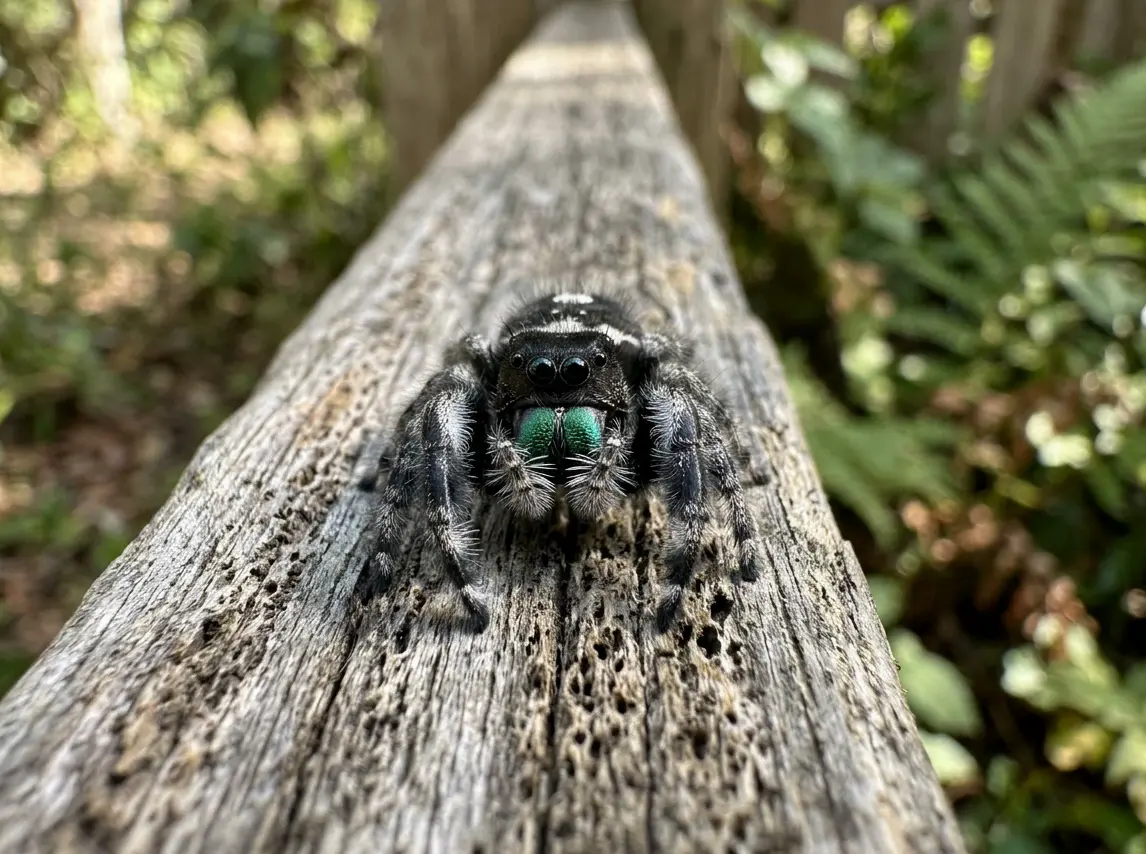
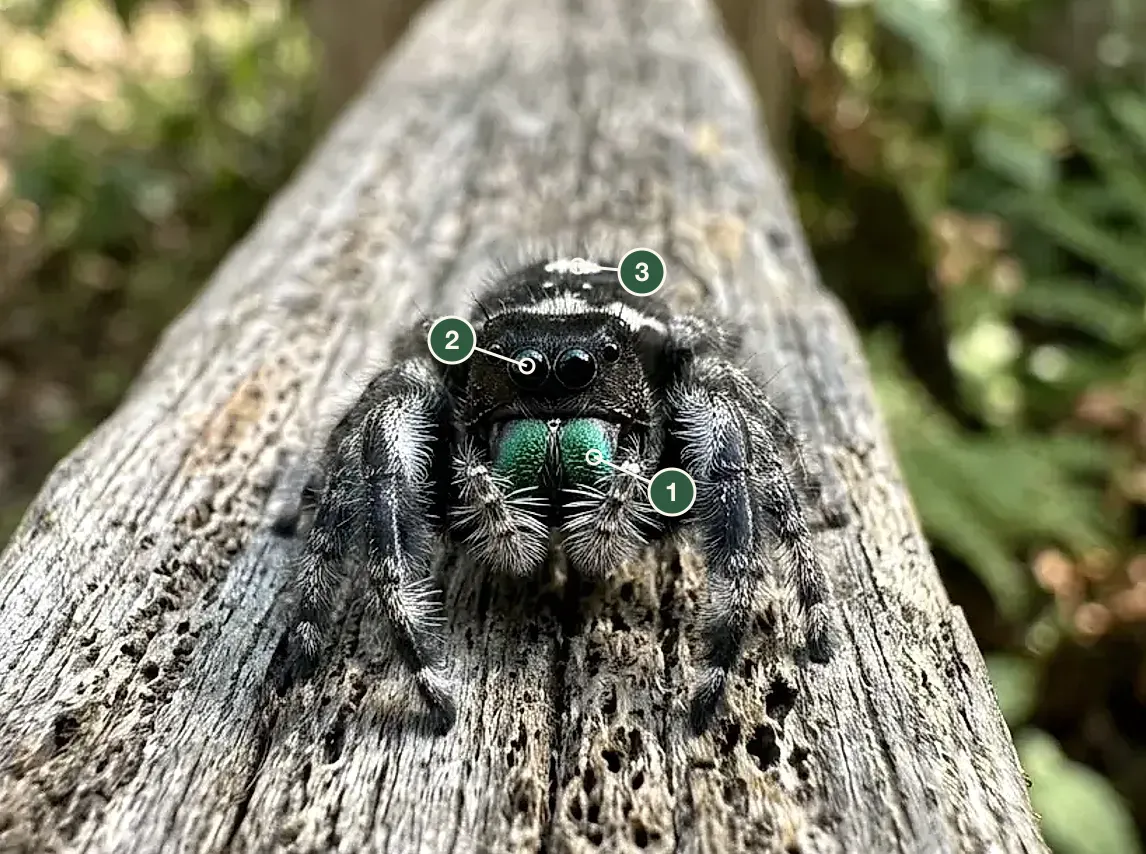
Bold Jumping Spider Phidippus audax
- 1 Iridescent chelicerae
- 2 Large anterior eyes
- 3 Abdominal pattern
One photo, an answer in seconds. Good for a clear shot of a common bug.
Enough for your first Quick ID (10 credits). No card needed.
Read by Gemini 3 Flash from Google
Your field card appears here
- The most likely name, with how sure the read is
- Marks in your photo that point to it, and the look-alikes to rule out
- Bite, sting and pest notes, plus when to ask a doctor or pest professional
Sample cards
What a field card looks like
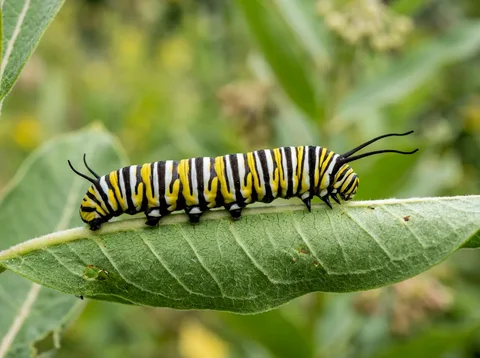
Each photo is an illustration we made and ran through Quick ID; the text under it is the card the tool returned, trimmed to the first marks.
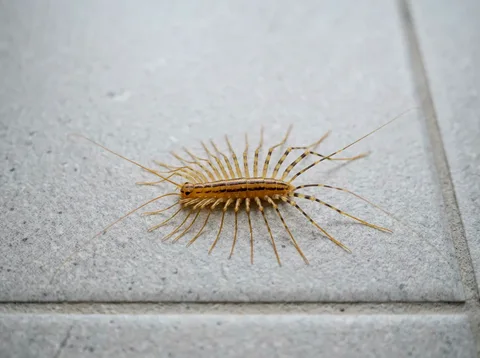 Illustration
House Centipede
Scutigera coleoptrataHigh confidence
Centipede or millipede
- 15 pairs of legs: Long, delicate legs that increase in length toward the rear of the body.
- Three dark stripes: Longitudinal dark stripes running down the length of the yellowish-grey body.
Not to confuse with: Stone Centipede
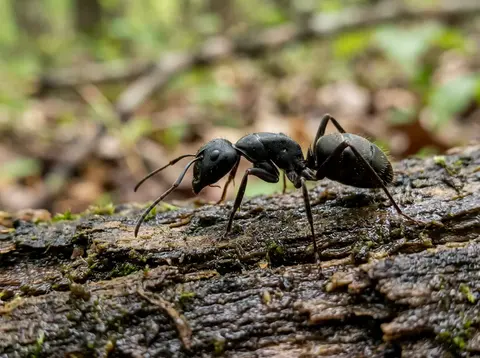 Illustration
Carpenter Ant
CamponotusHigh confidence
Ant
- Rounded thorax profile: The top of the thorax forms a smooth, continuous curve when viewed from the side.
- Single petiole node: A single distinct hump or node connects the thorax to the abdomen.
Not to confuse with: Black Field Ant
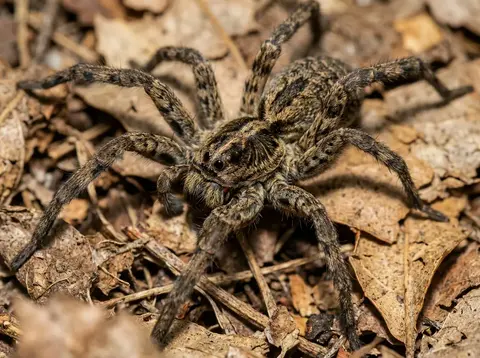 Illustration
Wolf Spider
LycosidaeHigh confidence
Spider
- Eye arrangement: Two large eyes positioned above a row of four smaller eyes.
- Carapace stripes: Distinct dark longitudinal bands running down the head and thorax.
Not to confuse with: Nursery Web Spider
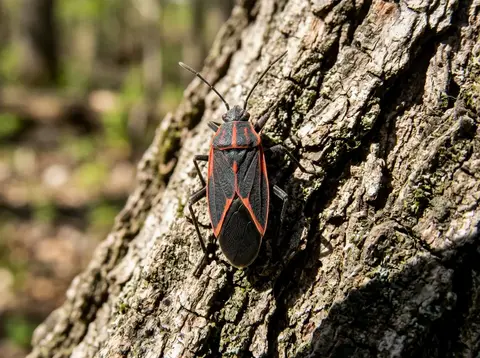 Illustration
Eastern Boxelder Bug
Boisea trivittataHigh confidence
True bug
- Red pronotum stripes: Three distinct red longitudinal lines on the black shield behind the head.
- Wing margins: Bright red-orange edges along the outer borders of the dark forewings.
Not to confuse with: Western Boxelder Bug
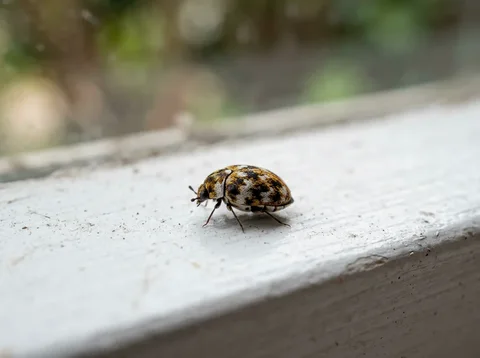 Illustration
Varied Carpet Beetle
Anthrenus verbasciHigh confidence
Beetle
- Mottled pattern: Irregular patches of white, brownish-yellow, and black scales.
- Oval shape: Small, rounded, and convex body typical of the genus.
Not to confuse with: Furniture Carpet Beetle
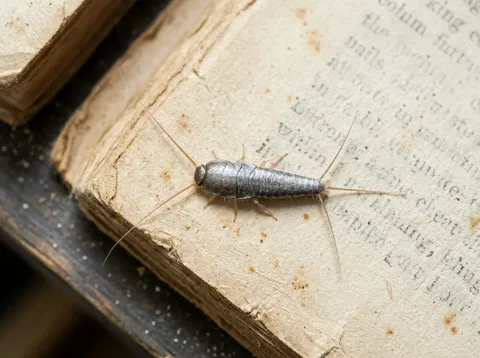 Illustration
Silverfish
Lepisma saccharinumHigh confidence
Other arthropod
- Silvery scales: The body is covered in metallic, light-reflecting scales.
- Three tail filaments: Three long, thin appendages extend from the end of the abdomen.
Not to confuse with: Firebrat
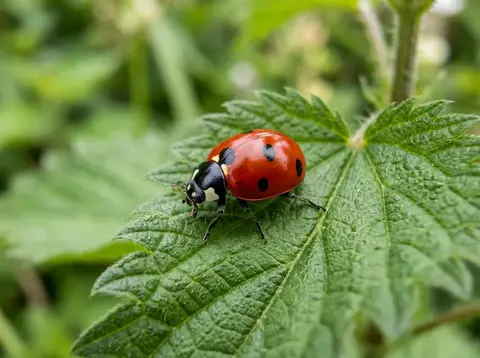 Illustration
Seven-spot Ladybird
Coccinella septempunctataHigh confidence
Beetle
- Seven black spots: Three spots on each wing cover and one shared spot near the head.
- Red wing covers: Bright red or orange-red hardened forewings.
Not to confuse with: Asian Lady Beetle
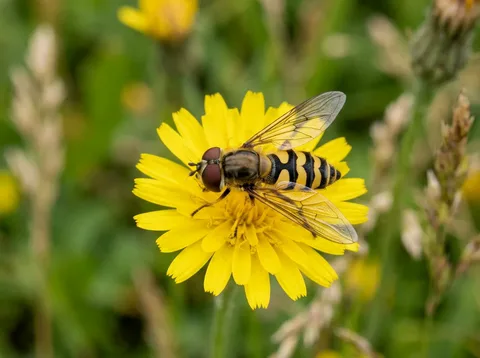 Illustration
Common Hoverfly
SyrphusHigh confidence
Fly or mosquito
- Large holoptic eyes: The massive eyes meet at the top of the head, identifying this as a male fly.
- Wasp-like banding: Yellow and black abdominal stripes mimic stinging insects to discourage predators.
Not to confuse with: Common Wasp
How it works
How to identify a bug from a photo
- 1
Take or pick a photo
Get close enough that the animal fills most of the frame. Top views show markings; side views show legs and body shape.
- 2
Choose Quick or Expert
Quick ID reads one photo in seconds. Expert ID compares up to three photos of the same animal and weighs the look-alikes more carefully.
- 3
Read the field card
Check the marks the tool points to against your bug, read how to rule out the look-alikes, and see the bite, sting and pest notes.
Two depths
Quick ID or Expert ID
Both return the same field card. Expert ID spends more time on hard cases: small spiders, beetle larvae, ant or termite.
Quick ID
10 credits- One photo
- Answer in about 10–20 seconds
- Best for a sharp, close photo
Model: Gemini 3 Flash from Google
Expert ID
54 credits- Up to 3 photos of one animal
- Three look-alikes checked when they exist
- Best for spiders, larvae and close calls
Model: Gemini 3.1 Pro from Google
Who uses it
For the bug in the kitchen and the one on the kale
A name is the first step to knowing whether to leave it, move it or call someone.
A bug on the kitchen floor or in the bed and you want to know what it is
Gardeners telling a pest from a helper on the same leaf
Hikers and campers checking a spider or caterpillar they met
Parents and teachers answering "what is that?" with real names
Pricing
Insect ID pricing: credits for every bug you photograph
New accounts get 10 free credits once, as soon as the email address is verified. One Quick ID costs 10 credits. A plan tops up your credits each month and has the lowest price per credit. A pack is paid once and its credits never run out. Either way, photo location data is removed and files are deleted after 30 days.
Plans
Field Notes
A few bugs a week from house and garden.
$5.45/ month
1,160 credits a month
≈ 116 Quick IDs or 21 Expert IDs
- New credits monthly; each top-up is good for 31 days
Entomologist
Keen naturalists and growers checking crops.
$12.95/ month
2,990 credits a month
≈ 299 Quick IDs or 55 Expert IDs
- New credits monthly; each top-up is good for 31 days
Expedition
Surveys, guiding and daily fieldwork.
$29.85/ month
7,290 credits a month
≈ 729 Quick IDs or 135 Expert IDs
- New credits monthly; each top-up is good for 31 days
Team plans
Billed per seat, three seats at least. The whole team draws on one balance, and the owner adds members and sees what each one used.
Lab Bench
Classrooms and nature clubs sharing one pool.
$11.65per seat / month
$34.95 in total · 8,040 credits
8,040 credits a month, shared by 3 seats
≈ 804 Quick IDs or 148 Expert IDs
- Shared team balance, per-member usage, single invoice
Museum Collection
Pest-control crews and survey teams, with a limit per member.
$26.95per seat / month
$80.85 in total · 19,560 credits
19,560 credits a month, shared by 3 seats
≈ 1,956 Quick IDs or 362 Expert IDs
- Shared team balance, per-member usage, single invoice
Credit packs
Pay once, nothing renews. Pack credits stay on your account for good, at a higher price per credit than a plan.
Magnifier
A summer of the odd bug on the patio.
$3.75one-time
620 credits · 0.60¢ per credit
≈ 62 Quick IDs or 11 Expert IDs
- Credits never expire
- Look-alikes and safety notes on every card
Bug Jar
A garden season, with Expert IDs for the hard ones.
$9.15one-time
1,790 credits · 0.51¢ per credit
≈ 179 Quick IDs or 33 Expert IDs
- Credits never expire
- Look-alikes and safety notes on every card
Pinning Box
Field trips, class projects and big surveys.
$22.45one-time
4,610 credits · 0.49¢ per credit
≈ 461 Quick IDs or 85 Expert IDs
- Credits never expire
- Look-alikes and safety notes on every card
Credits per identification
Quick ID is read by Gemini 3 Flash and Expert ID by Gemini 3.1 Pro, both from Google. A try that ends in "clearer photo needed" is refunded.
| Identification | Credits |
|---|---|
| Quick ID (1 photo) | 10 |
| Expert ID (up to 3 photos) | 54 |
| Photo too unclear to name (refunded) | 0 |
Bought the wrong thing? For 7 days after a purchase, and as long as you have spent at most 10% of its credits (yearly plans: of the whole year), we refund what is left. Renewals are not refundable.
Before you buy, you can run a Quick ID on your own photo, read the refund policy, spend the same credits from an AI assistant or ask support about a team plan.
FAQ
Questions about identifying insects
Another question? Write to us at support@insectid.app
Is Insect ID free to try?
You can try it for free. New accounts get 10 free credits once, as soon as the email address is verified. A Quick ID costs 10 credits and an Expert ID costs 54. Pack credits never expire, and credits for an unclear photo come back.
How accurate is the identification?
Clear, close photos of common species usually come back with high confidence. Every card shows its confidence and the look-alikes, so you can check the marks yourself before you rely on it.
Which AI reads my photos?
Quick ID uses Gemini 3 Flash and Expert ID uses Gemini 3.1 Pro, both from Google. Insect ID is independent and not affiliated with Google.
Can it tell me if a bite or sting is dangerous?
It lists what is known about bites, stings and venom for the species, but it is information, not medical advice. If you have symptoms after a bite or sting, get medical help.
What makes a photo easy to identify?
Fill the frame with the animal, keep it in focus and add a top view plus a side view if you can. Expert ID reads up to 3 photos of the same animal.
Is there an insect identifier app?
Insect ID runs in your phone browser, so there is nothing to install. Add it to your home screen from the browser menu and it opens like an app.
What happens to my photos?
Location and camera data are removed when you upload. Photos and cards stay in your private history and are deleted automatically after 30 days, or sooner if you delete them.
What if the photo is too blurry?
The tool asks for a clearer photo instead of guessing, tells you what to change, and returns the credits for that try.
Last updated: